
Introduction
Jewelry manufacturers face tough finishing challenges every production day. Plasma Polishing Machine delivers ultra-fine surface results for precious metal workpieces. Selecting the right machine supplier directly shapes long-term production returns. Dongguan Bayi Automation releases a practical sourcing handbook for global buyers. This handbook breaks down supplier types and standardized procurement workflows. It helps jewelry factories avoid costly mistakes during equipment purchasing. International procurement teams gain clear, actionable guidance from this document.
Supplier Classification in Plasma Polishing Machine Supply Chains
Buyers must understand supplier roles before starting equipment inquiries. Each supplier category carries unique strengths and application limits. Source factories own design, assembly and core intellectual property. Dongguan Bayi Automation is a qualified OEM founded back in 2017. The company runs an 800-square-meter manufacturing workshop in Dongguan. It independently develops plasma polishing and metal deburring equipment lines. Direct OEM cooperation removes extra markup from middle trading partners. Buyers get flexible customization and fast technical support from engineers.
Cross-border trading companies act as intermediaries for overseas sales. They source machines from Chinese factories and serve international clients. Trading firms handle export documents, international logistics and basic service. They fit buyers who prefer local language and simple shipment coordination. Yet buyers may not connect directly with the original engineering team.
Regional distributors hold manufacturer authorization for defined territories. They deliver local sales activities and basic on-site technical assistance. Distributors suit buyers who value nearby service points and quick responses. However, they have limited power to modify machine specifications at factories.
For jewelry polishing, custom tuning for precious metals matters greatly. Direct cooperation with a capable OEM factory becomes the best strategy. This method ensures equipment fully matches your jewelry production needs.
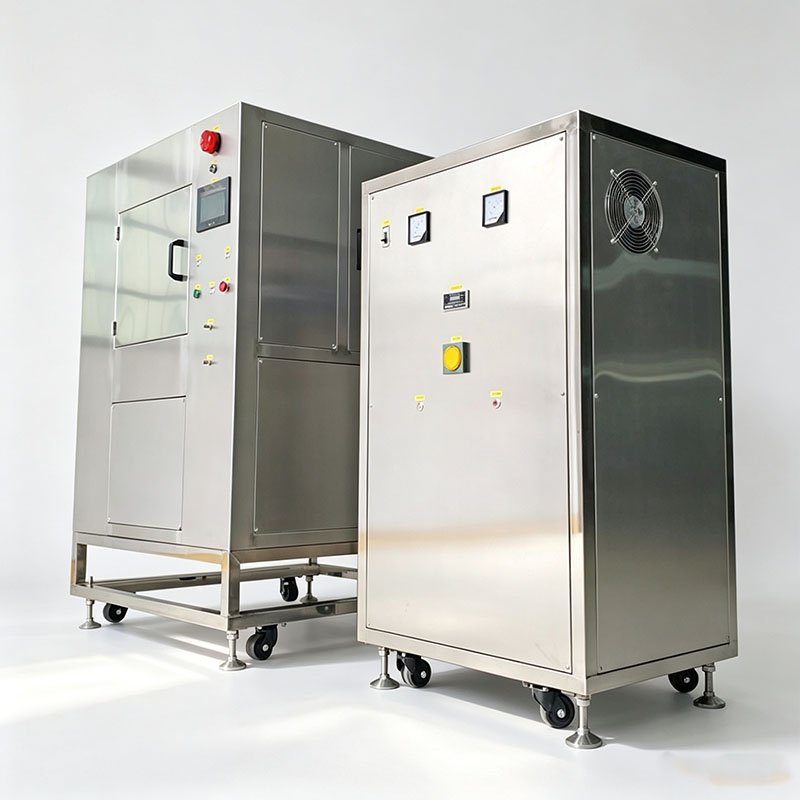
Four-Step Structured Procurement Workflow for Jewelry Plasma Polishers
A systematic procurement process lowers risk for industrial equipment buyers. The handbook defines four clear stages from requirement setting to negotiation.
Step 1: Document all technical and operational requirements
Write down your exact application scenarios before contacting suppliers. Define target workpieces, such as gold rings or titanium jewelry pendants. List polishing quality standards and required deburring rate clearly. Many jewelry lines demand a deburring rate higher than 99.9 percent. Record workpiece sizes, metal types and daily production throughput targets. Check whether you need full automation or integration with existing lines. Clear requirement lists help suppliers quote accurate and suitable solutions.
Step 2: Screen and verify potential machine suppliers
Complete factual due diligence to build your qualified supplier shortlist. Check business registration, factory scale and company operation history. Review product portfolios to find jewelry-specialized plasma polishing models. The BY-500A is a dedicated machine for precious metal jewelry finishing. Ask suppliers to provide valid international compliance certificates. CE certification is essential for European jewelry manufacturing clients. Valid CE documents should come from recognized certification bodies. Ente Certificazione Macchine issues CE certificates following EN ISO 12100:2010. Buyers must check certificate issue dates and valid expiry periods carefully. Request real jewelry industry case studies and verifiable client references.
Step 3: Complete sample testing and technical site evaluation
Never skip practical sample polishing tests before placing bulk orders. Send your actual jewelry samples to shortlisted suppliers for trial runs. Evaluate surface smoothness, edge finish and polishing batch consistency. A reliable OEM will deliver a full written test report after sample processing. Arrange virtual or physical factory audits to inspect production conditions. Watch quality control procedures and assess the technical team’s expertise. Video factory tours save travel cost for cross-border jewelry equipment buyers.
Step 4: Lock commercial terms and technical specifications
Negotiate and confirm all binding terms once you select your preferred vendor. Reach agreements on unit price, MOQ and secure payment arrangements. A common term uses 50 percent deposit before machine production starts. The remaining balance is paid before the finished machine shipment. Finalize machine specs, optional modules and production line integration rules. Confirm production lead time, shipping method and formal warranty clauses. Bayi’s typical production cycle takes 30 to 45 working days for standard units. Most OEMs offer a one-year warranty for all core machine components. Clarify remote video technical support for fast after-sales troubleshooting.
Benefits of Sourcing Plasma Polishing Machine from Chinese Manufacturers
China grows as a global manufacturing hub for advanced surface finishing gear. Chinese equipment factories bring multiple advantages for international buyers. Production capacity supports both standard and custom non-standard machine orders. Standard models cover 100A, 300A, 500A and 800A plasma polishing units. Engineers can design special machines from 1000A to 2500A upon customer requests. Custom designs fit long tube parts or automatic chain processing jewelry systems. Integrated domestic supply chains keep pricing competitive without weakening tech. Procurement teams achieve better investment returns with controlled equipment cost. Established Chinese OEMs hold export experience serving global jewelry markets. They actively apply CE certificates and master full export compliance procedures. Buyers in Europe, North America and Southeast Asia enjoy smoother shipments. The BY-500A jewelry plasma polisher is one mature custom-ready model. It targets high-precision deburring and ultra-fine polishing for precious metals.
Three Major Procurement Risks and Avoidance Strategies
Hidden procurement traps create financial losses for jewelry manufacturers. The handbook highlights three critical areas for careful buyer validation.
First, verify certificate authenticity and its covered product scope. Do not trust certificate copies without deep inspection and verification. Check issuing bodies, unique certificate numbers and matched machine models. Confirm referenced safety standards and valid start and expiry dates. Dongguan Bayi’s CE certificate number is 3N240806.DBAQC99. It remains valid from August 6, 2024 until August 5, 2029. Trustworthy manufacturers support buyers to verify certificates online.
Second, confirm MOQ, pricing and delivery timeline in written quotations. Ambiguous contract terms easily trigger commercial disputes later. Check if the minimum order quantity is one unit or larger batches. Secure written commitments for production and international shipping time. Read price breakdowns to know included and excluded cost items. Machine bodies and standard spare parts may sit inside the base quotation. Shipping fees, insurance and customs duties usually fall outside base prices.
Third, detail warranty scope and after-sales service within formal contracts. Customer service work officially begins once the machine arrives on site. Define warranty duration and the exact list of covered machine components. Agree on service channels including remote video support and on-site service. Record on-site service charges for out-of-warranty repair visits clearly. Confirm full operation manuals, installation guides and staff training files.
Spotlight: Dongguan Bayi Automation Equipment Co., Ltd
Dongguan Bayi Automation specializes in plasma polishing and deburring machines. Founded in 2017, the factory occupies an 800-square-meter production space. Its product portfolio includes plasma polishers and ultrasonic cleaning gear. The BY-500A jewelry plasma polisher serves precious metal jewelry producers. It adopts a full automatic control system and reaches ≥99.9% deburring efficiency. The company owns valid CE certification for its plasma polishing product line. Core components enjoy a 1-year manufacturer warranty for global customers. Remote video technical support stays available after warranty expiration. Bayi accepts MOQ of one unit for jewelry plasma polishing machine orders. Standard lead time for production and preparation runs 30–45 working days.
Conclusion
This new handbook simplifies complex B2B sourcing for jewelry plasma polishers. Jewelry plant procurement teams can reduce risks with structured evaluation. Direct OEM sourcing remains the top choice for custom precious metal finishing. Global jewelry factories can review the full guide for free industry insights. Manufacturers may contact Bayi Automation for sample polishing tests.